Pakistan's perils and possibilities: a nuclear-armed pawn and player, and the 250 million people the headlines leave out.
Editor's view · First written June 2023 · Updated October 2026
Pakistan's perils and possibilities
To most Americans, Pakistan is a security file. It is where Osama bin Laden was found and killed in 2011, in a compound about a mile from the country's military academy. It is where A.Q. Khan, the father of its nuclear bomb, ran a network that sold weapons know-how to Iran, Libya and North Korea. For four decades it played a double game in Afghanistan, arming the mujahideen against the Soviets with American money and later sheltering the Taliban while serving as a U.S. partner in the war against them.
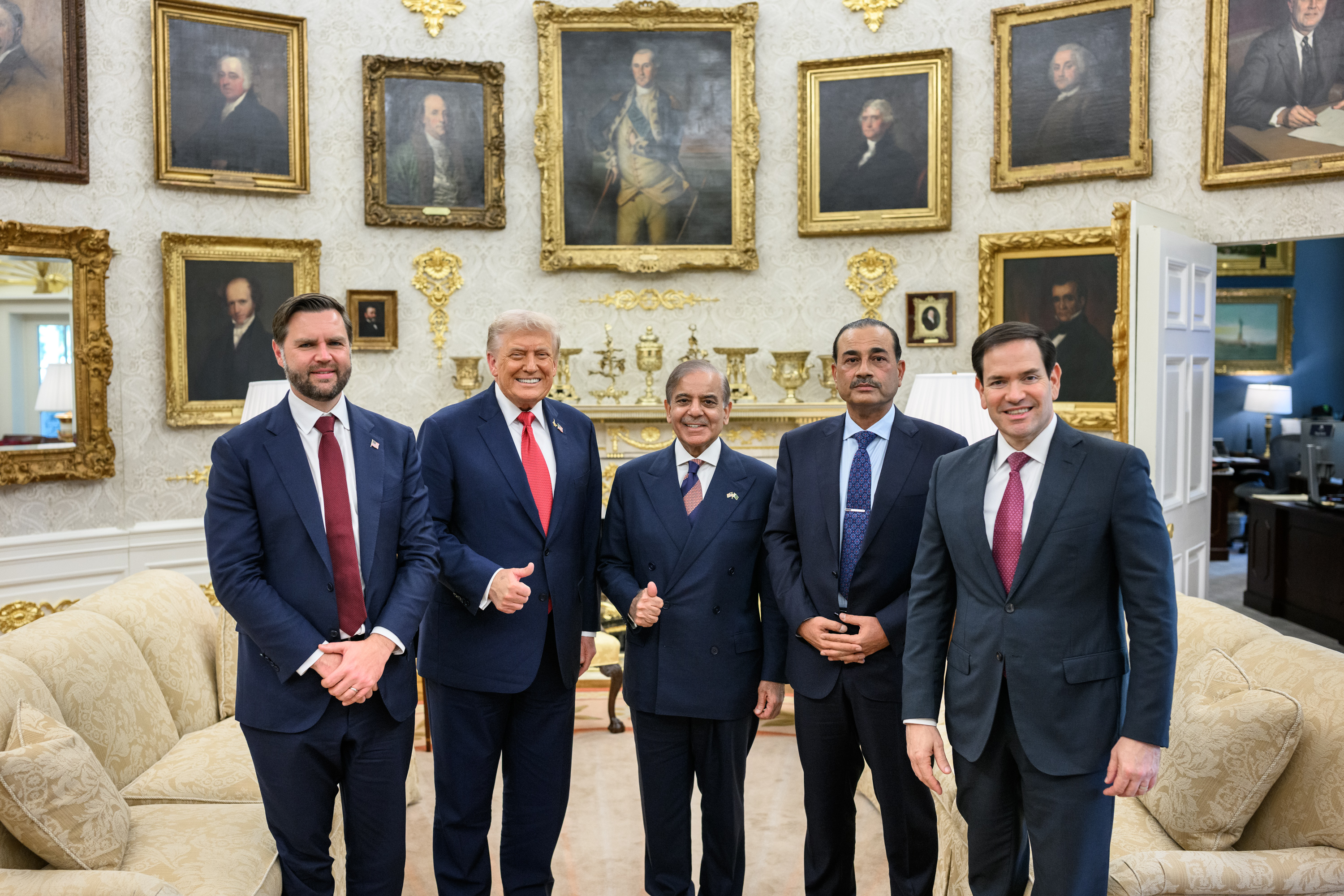
Pakistan has been a pawn of the great powers, and a shrewd player among them. It is a major non-NATO ally of the United States and China's closest partner. In 2025 it signed a mutual-defense pact with Saudi Arabia and won a warm welcome at the White House. Real power has rested with the army throughout, whether generals ruled directly, as they last did until 2008, or from behind civilian governments, as now. Its most popular politician, Imran Khan, is in prison.
The cost has been paid by ordinary Pakistanis. In 1990 they lived longer than Indians, Bangladeshis or Nepalis; today they live the shortest lives of the four, and their income per person has fallen well behind India and Bangladesh (see Then & Now). Their aspirations for jobs, schooling, clean government and a free press get little coverage.
That is the possibility. A stable Pakistan of about 250 million young, entrepreneurial people would be a major market and partner for America. The peril is that it stays what it has been: a nuclear-armed state run for its generals.
— John Laxmi
Editor's comments
The editor comments on Pakistan when events warrant, rather than on a fixed schedule. Newest first.
-
U.S. agrees to a peace deal with Iran after Pakistan’s mediation
Editor's comment
The Wall Street Journal · U.S. agrees to a peace deal with Iran after Pakistan's mediation
Pakistan's role in the talks between the United States and Iran will be revealed, disputed and debated for years. Whatever it actually contributed, its willingness to step in was valuable in itself.
All conflicts benefit from mediators, even those who take no substantive action. That is as true of personal quarrels as of international ones. When friends or relatives are at odds, many people stand aside, telling themselves it is none of their business. It is better to extend a hand and lend an ear, even at the risk of complicating matters. Pakistan took that risk despite the awkwardness of its own ties to the parties involved, and it deserves credit for trying.
-
China condemns the Islamabad mosque attack and pledges support for Pakistan
Editor's comment
Reuters · China condemns the Islamabad mosque attack and pledges support for Pakistan
Is it common for China to issue a statement like this, backing another government over an attack with no apparent connection to China? It seems unusual, perhaps unprecedented. It is the kind of statement Washington issues routinely. Is China trying to act more like America?
-
Trump’s strange love affair with Pakistan
Editor's comment
The Wall Street Journal · Trump's strange love affair with Pakistan
Wall Street Journal op-ed writer Sadanand Dhume leaves out a likely reason for President Trump's warmth toward Pakistan: its delicate, perhaps covert, role regarding Iran. The piece refers only obliquely to “concrete cooperation with the U.S. military on counterterrorism.”
Consider the timing. The terrorist killings in Indian-administered Kashmir came on April 22, 2025, followed by fighting between India and Pakistan and a ceasefire on May 10. In the same weeks, Iran's proxies were attacking American bases and shipping, and Washington was weighing military action that might have needed Pakistan's cooperation. Pakistan's help, with that of several Arab states, was reported to matter to the June 22 U.S. strikes on Iran. Could continuing logistical help to American efforts in the Middle East explain the special treatment Pakistan is getting?
None of this means the President's favor must last, or that it should come without conditions. But the Iran angle deserved a mention.
-
When flattery becomes foreign policy
Editor's comment
Dawn · When flattery becomes foreign policy
There was nothing “absurd,” as this article claims, in Prime Minister Shehbaz Sharif seizing the moment to court President Trump at the Gaza peace summit in Sharm el-Sheikh. Pakistan stole the show: its prime minister picked a spot right behind Mr. Trump on the stage, while India was nowhere to be seen.
Nor was the occasion one of “gravity,” as the writer says. It was a long, unscripted celebration of a historic achievement, and Mr. Trump himself joked as he thanked the leaders present.
Pakistan in proportion
Reference figures, refreshed on a schedule.
Share of the five countries, 2024
Size of the economy, 1990–2024
GDP in current U.S. dollars, not adjusted for inflation.
Then and now
1990 (lighter bar) and 2024 (darker bar)
Life expectancy bars are drawn on a scale of 0 to 85 years.
Exchange rate
Rs 277.21 per US$
Oct 12, 2026 · ExchangeRate-API · updated weekly
U.S. trade in goods with Pakistan
| 2025 | 2026 Jan–Jul | |
|---|---|---|
| U.S. exports | $3.1bn | $2.0bn |
| U.S. imports | $5.4bn | $3.0bn |
| U.S. balance | −$2.3bn | −$1.0bn |
U.S. Census Bureau · updated monthly · negative = U.S. deficit
Sources: World Bank, World Development Indicators (population, GDP, GDP per capita, life expectancy). Updated yearly.
Stereotype and Reality
Stereotype: a terrorist haven of bearded militants, mountain hideouts and anti-American mobs, the Pakistan of decades of war coverage and films like Zero Dark Thirty.
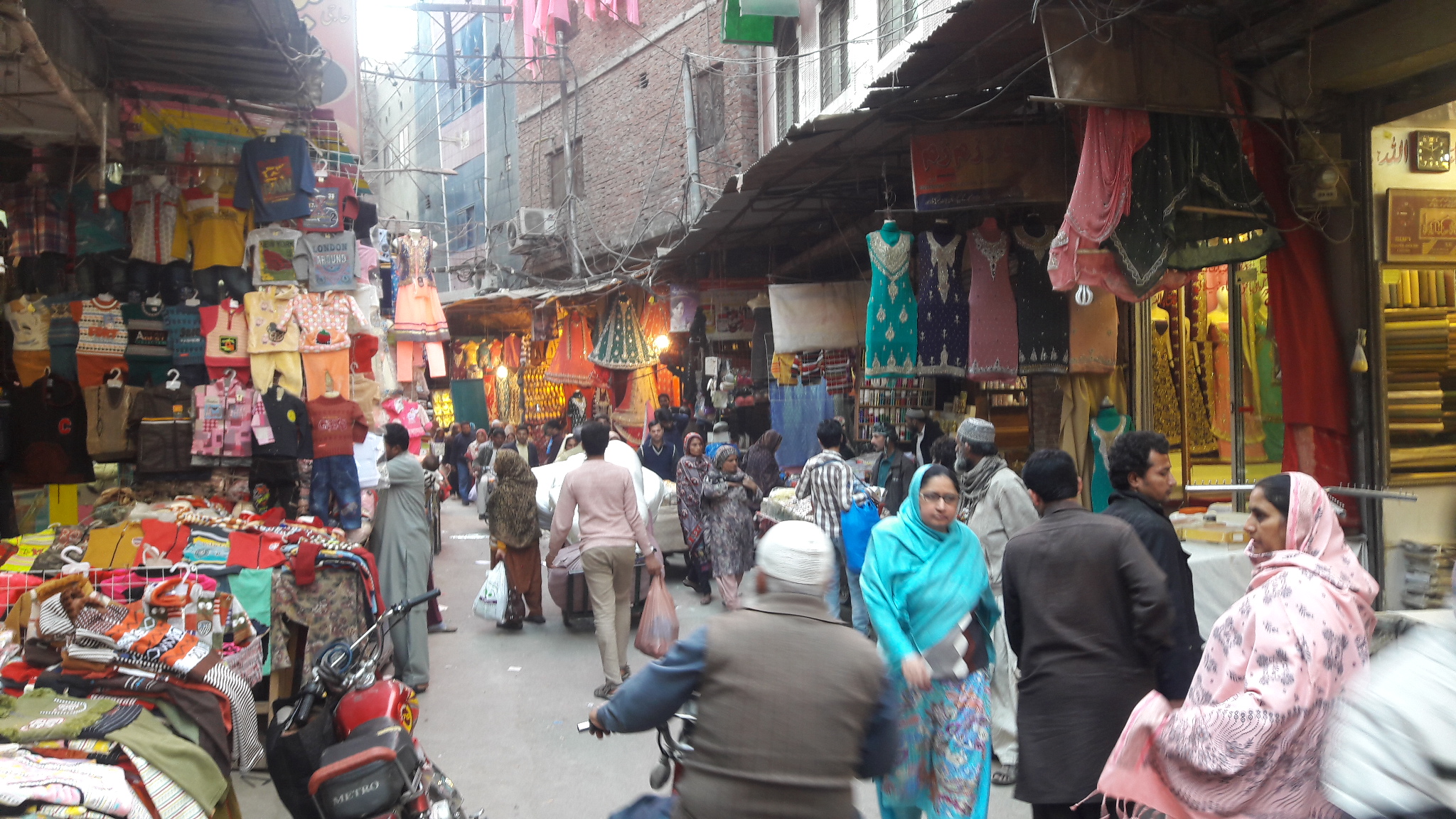
Reality: most of the 250 million Pakistanis live far from the tribal frontier and want what Americans want: jobs, schools and safe streets. Lahore and Karachi are huge, cricket-mad cities with a lively press and a growing tech workforce. Malala Yousafzai, shot by the Taliban for going to school, became the youngest Nobel Peace laureate. Pakistanis have far more often been the victims of militant violence than its perpetrators: about 33,000 civilians, soldiers and police were killed in Pakistan's wars against militants from 2001 to 2019.
Source: Costs of War project, Brown University, covering 2001–2019. Militant violence has surged since 2021, so the toll is higher today: in 2025 alone, 580 civilians and 667 security personnel were killed, the most since 2015 and 2011 respectively (PICSS, via AP).
Other countries
India · Bangladesh · Sri Lanka · Nepal

