History · 1947 to today · First written June 2023 · Updated October 2026
Discover the new subcontinent
How India, Pakistan, Bangladesh, Sri Lanka and Nepal got from independence to 2026: a shared starting point, then sharply different paths. These are the trends and forces that Americans must learn to understand, cooperate and coexist with.
1947 – 1950s
New nations, new experiments in democracy
South Asia was among the first regions to decolonize. India and Pakistan became independent in 1947 and Ceylon, now Sri Lanka, in 1948. Nepal was never colonized; it opened its politics to parties in 1951.
America was a source of inspiration, but the new nations did not copy its free-market model. Most chose a large role for the state in planning economic development and social progress. India’s constitution drew on several democracies, including an American-style list of fundamental rights and judicial review.
1947 – 1971
Partition and division
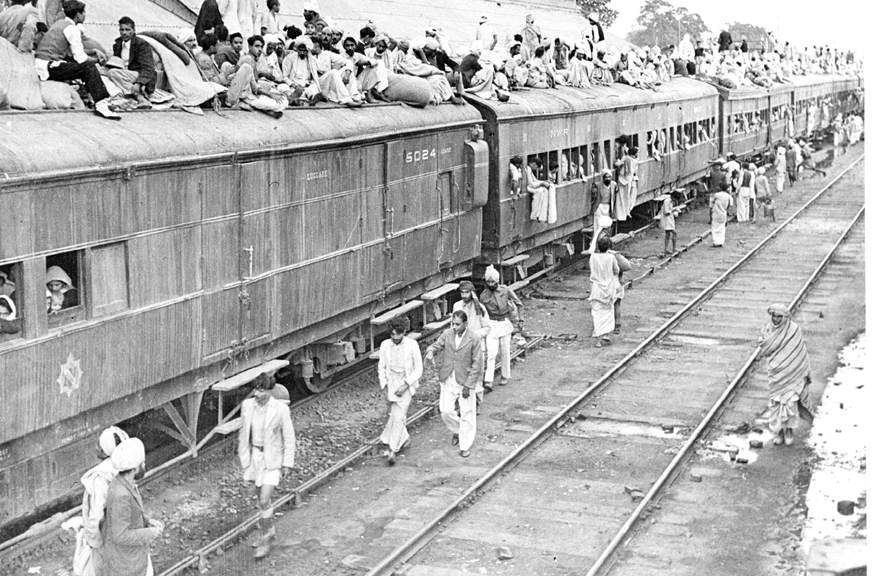
The partition of British India in 1947 created India and Pakistan amid religious and regional violence. In 1971 East Pakistan broke away, with India’s military support, to become Bangladesh.
1947 – 1999
Rivalries, wars and nuclear weapons
During the Cold War, India grew closer to the Soviet Union while Pakistan became an American ally. India and Pakistan fought wars in 1947–48, 1965 and 1971, and again at Kargil in 1999; India and China fought a border war in 1962. The Soviet invasion of Afghanistan in 1979 drew the region further into superpower conflict.
India first tested a nuclear device in 1974, and both India and Pakistan tested weapons in 1998. National pride and scientific prowess played a part, but both countries built explicit deterrence doctrines, making the subcontinent a critical region for the whole world.
1970s – 1990s
Hard decades
Through much of the late twentieth century the region struggled with seasonal natural disasters, sluggish economic growth, rapid population growth and weak governance. Sri Lanka endured a civil war from 1983 to 2009; Nepal a Maoist insurgency from 1996 to 2006, after which it abolished its monarchy.
1970s onward
Job-seekers emigrate, and send home the seeds of modernity
From the oil boom of the 1970s, large numbers of South Asian laborers and professionals went to the Gulf states, building their new cities, ports, airports, hospitals and schools. They remitted precious foreign exchange to their homelands and brought back electronics and other goods, giving families a foretaste of the prosperity their countries were getting ready to build.
1990s
The leap in telecommunications and commerce
In the 1990s the telecommunications and technology revolution let the region leapfrog into the modern world. Protectionist policies were relaxed, most decisively in India’s 1991 reforms, as opportunities in trade and investment were recognized. India grew into a powerhouse in information technology; Bangladesh became the world’s second-largest garment exporter, after China; Sri Lanka became a major tourist destination.
Investments made after independence in universities and large industries began to pay off. English, adopted from the colonial era, became an asset. Highly educated professionals migrated to the Gulf, Canada, the United States, Britain and Australia, and cricket became a passion in which the region’s teams rank among the world’s best.
2000s – 2020s
The diaspora dazzles
By the turn of the century South Asian doctors, engineers and IT professionals were everywhere in the West, while entrepreneurs built firm footholds in restaurants, hotels and retail. Early immigrants, many of them economic migrants, benefited from a largely meritocratic environment and learned to overcome sporadic discrimination.
Many rose to lead in business, the arts, sports and politics. Rishi Sunak served as Britain’s prime minister from 2022 to 2024 and Kamala Harris as U.S. vice president from 2021 to 2025, while others became chief executives of multinationals, Silicon Valley founders and Wall Street leaders. In 2023 The Economist judged India’s diaspora bigger and more influential than any in history.
1990 – today
Five countries, five paths
The countries that started close together have pulled apart. Bangladesh has caught up with India on income per person; Pakistan, which had the longest life expectancy of the four lower-income countries in 1990, has fallen behind both; Sri Lanka, always the outlier on health and education, remains ahead despite its 2022 economic crisis; Nepal has made some of the fastest gains against extreme poverty.
2010s – today
Inequality and polarization
Cheap mobile phones and social media opened new possibilities in communication, work, entertainment and politics. As economies opened to competition, inequality rose and polarization deepened, as in much of the world. Communal and religious tensions, once simmering and sporadic, were amplified into divisive and sometimes violent conflict.
Democracy has been severely strained in Pakistan and Sri Lanka. Mass protests toppled Bangladesh’s long-ruling government in 2024 and Nepal’s in 2025. India’s democracy, which survived the Emergency of 1975–77, faces new challenges from majoritarian politics.
Today
Multipolar geopolitics
As China has expanded its footprint across the region through economic aid and loans, India’s anxieties have grown. Rivalry between America and China has made each of these countries of strategic interest to all the major powers, including Europe, Russia, China and the United States.
These are the major trends and forces of a new South Asia that Americans must learn to understand, cooperate and coexist with. This site is designed to help with that process.
See the divergence in the data
Income, human development, life expectancy, child mortality and poverty for each country, in 1990 and today.

